|
|
 |
Palmarosa essential oil (Cymbopogon martinii var martinii) is obtained from a sweet-scented grass found growing wild throughout India, especially to the northeast of Bombay and toward the Himalaya Mountains, Nepal and Pakistan. Palmarosa grass is native to Southeast Asia and has been used in medicine and also as an effective insect repellent throughout this region for thousands of years.
Read more…
|
Palmarosa grass

|
 |
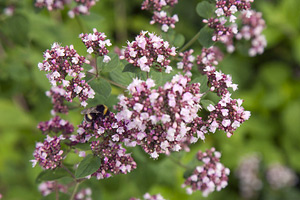
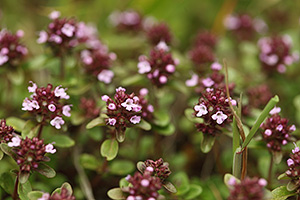
Sweet marjoram essential oil is derived from the flowering tops of Origanum majorana, which is classified under the Labiatae family along with over 30 other species of ‘marjoram’ within the genus Origanum. This diversity and the fact that origanums have been widely used for both medicinal and culinary purposes over many centuries has led to a certain amount of confusion regarding their correct identification.
Read more…
|
Sweet marjoram flowers

|
 |
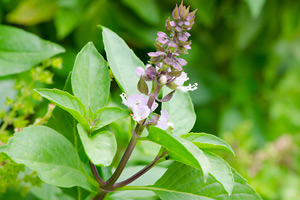
The sweet and refreshing aroma of basil essential oil will be familiar to most people, since unlike some oils it is very similar in aroma to the popular herb it is obtained from. However, there are several types of basil oil available on the aromatherapy market and it is important that you are aware of the differences between them, and why this may matter.
Read more…
|
Sweet basil leaves

|
 |
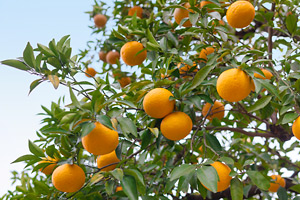
Mandarin essential oil (Citrus reticulata) has a delicious aroma that brings a feeling of joy and happiness to any occasion, and is appreciated equally by young and old alike. Mandarin is actually the collective name given to a class of oranges that possess thin, loose peel and a flavour much sweeter than that of the orange. This large group of citrus fruits are all characterised by brightly coloured peel and pulp, segments that separate easily and a rind that is easy to peel. Read more…
|
Mandarin fruits

|
 |
There are several varieties of the herb thyme, but the ‘common’ thyme used for the production of thyme essential oil is believed to be an improved, cultivated form of the wild thyme which originated in the mountainous regions of Spain and Europe. This plant is the thymol chemotype of the herb Thymus vulgaris which belongs to the Lamiaceae (also known as the Labiate) family. Read more…
|
Thymus vulgaris

|
 |
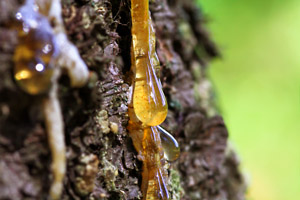
Myrrh essential oil is derived from an oleo-gum resin which is secreted naturally from the trunk of Commiphora myrrha trees when they are wounded or lacerated. There are almost 60 species of Commiphora found throughout Africa and Arabia, and although several produce an oleo-gum resin, Commiphora myrrha is the species of choice for producing the myrrh essential oil used in aromatherapy
Read more…
|
Commiphora myrrha

|
 |
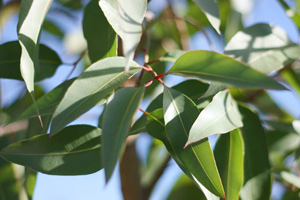
The essential oil derived from the leaves of this species is known in aromatherapy as both lemon eucalyptus as well as by its botanical name of Eucalyptus citriodora. Although this essential oil is not as popular in aromatherapy as the ubiquitous Eucalyptus globulus, it is fast growing in reputation due to its powerful bactericidal properties.
Read more…
|
Euc. citriodora leaves

|
 |
Since time immemorial ginger has been valued as a spice and medicine, and today it is still traded as a valued commodity around the world, either fresh, dried, ground, crystallised, candied, or preserved. As if all of that is not enough, the plant also provides one of the most effective and therapeutic tools available to the aromatherapist; ginger essential oil.
Read more…
|
Ginger root

|
 |
Elemi is a soft, fragrant oleoresin obtained from the trunk of Canarium luzonicum trees, and elemi essential oil is extracted from this oleoresin. For over 100 years the name ‘elemi’ was used as a collective term for a number of oleoresins derived from several botanical species and geographical origins. However today, ‘elemi’ generally relates only to oleoresin and extracted essential oil originating from the Philippines, which is known and traded internationally as Manila elemi. Read more…
|
Canarium luzonicum

|
Older Posts »
|