Essential Oils And Plant Extracts Combat E. Coli
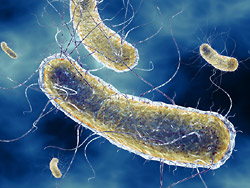 New research has discovered that olive extract and lemongrass essential oil reduced Escherichia coli in hamburger to undetectable levels. The occurrence of Escherichia coli O157:H7, the prime E. coli pathogen in ground beef, is inactivated by high heat during cooking, which also leads to the formation of cancer-causing heterocyclic amines (HCAs).
Building on previous research, this study evaluated the ability of plant extracts, spices, and essential oils to simultaneously inactivate E. coli O157:H7 and prevent the formation of HCAs. Spices and extracts were added at a 5-percent concentration while essential oils were tested at a 1-percent level.
The best results for both measures were obtained from an olive extract (a freeze-dried, organic olive water extract powder consisting of 98-99 percent olive pulp and 1-2 percent citric acid), apple-skin extract (containing an 82-percent concentration of a mixture of phenolic compounds), and clove-bud essential oil (up to 90 percent eugenol). Olive extract and lemongrass essential oil reduced E. coli O157:H7 to undetectable levels, while onion powder, which appeared to reduce microbial growth, and olive extract had the greatest inhibitory activity against HCA formation.
Plant Extracts, Spices, and Essential Oils Inactivate Escherichia coli O157:H7 and Reduce Formation of Potentially Carcinogenic Heterocyclic Amines in Cooked Beef Patties.
Journal of Agricultural and Food Chemistry, March 7, 2012
Abstract
Meats need to be heated to inactivate foodborne pathogens such as Escherichia coli O157:H7. High-temperature treatment used to prepare well-done meats increases the formation of carcinogenic heterocyclic amines (HCAs). We evaluated the ability of plant extracts, spices, and essential oils to simultaneously inactivate E. coli O157:H7 and suppress HCA formation in heated hamburger patties.
Ground beef with added antimicrobials was inoculated with E. coli O157:H7 (107 CFU/g). Patties were cooked to reach 45 °C at the geometric center, flipped, and cooked for 5 min. Samples were then taken for microbiological and mass spectrometry analysis of HCAs.
Some compounds were inhibitory only against E. coli or HCA formation, while some others inhibited both. Addition of 5% olive or apple skin extracts reduced E. coli O157:H7 populations to below the detection limit and by 1.6 log CFU/g, respectively.
Similarly, 1% lemongrass essential oil reduced E. coli O157:H7 to below detection limits, while clove bud essential oil reduced the pathogen by 1.6 log CFU/g. The major heterocyclic amines 2-amino-3,8-dimethylimidazo[4,5-f]quinoxaline (MeIQx) and 2-amino-1-methyl-6-phenylimidazo[4,5-b]pyridine (PhIP) were concurrently reduced with the addition of olive extract by 79.5% and 84.3% and with apple extract by 76.1% and 82.1%, respectively.
Similar results were observed with clove bud oil: MeIQx and PhIP were reduced by 35% and 52.1%, respectively.
Addition of onion powder decreased formation of PhIP by 94.3%. These results suggest that edible natural plant compounds have the potential to prevent foodborne infections as well as carcinogenesis in humans consuming heat-processed meat products.
Copyright © 2012 American Herbal Products Association, Engredea News & Analysis